
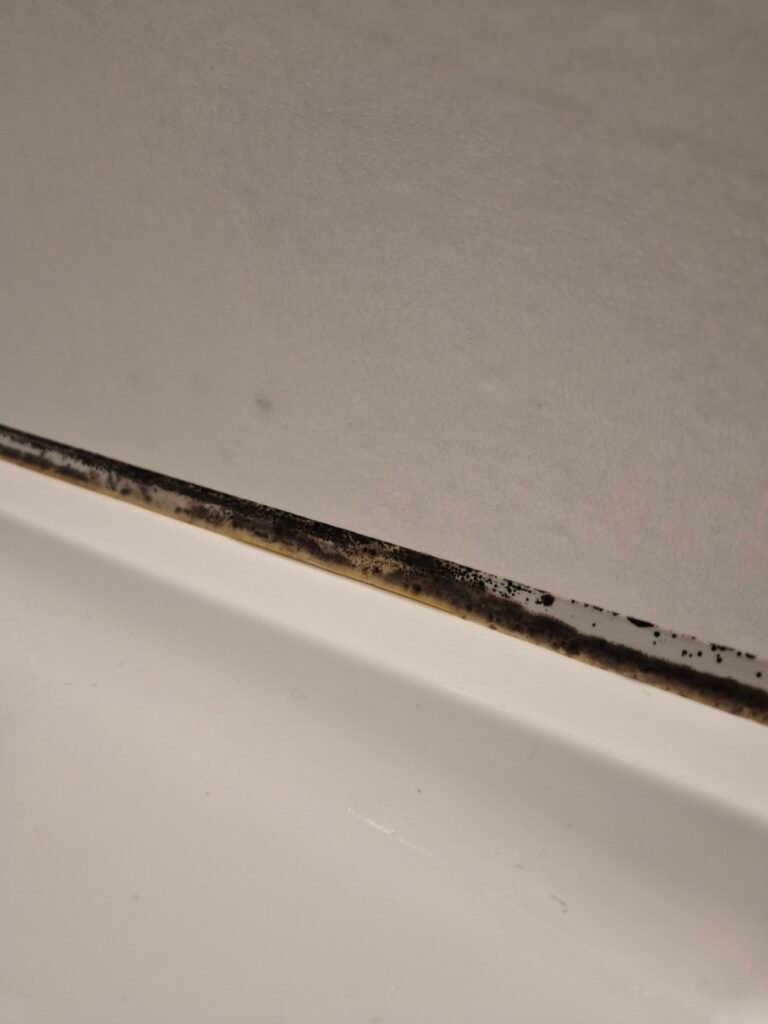
A cracked or peeling bead of silicone around a bath or shower looks like a cosmetic problem. On a commercial site — a hotel, a leisure facility, a block of student accommodation, a school — it rarely stays that way. Silicone sealant water damage is one of the most common and most avoidable maintenance issues on any multi-bathroom estate.
Silicone sealant isn’t decorative. It’s the only thing standing between the water running down your bathroom walls and the structure behind them. Once it fails, that barrier is gone — and the consequences don’t stop at the bathroom it’s in.
The short version
- Failed silicone lets water track behind tiles and under flooring, into the subfloor, joists and the ceiling below.
- By the time a stain shows on a downstairs ceiling, water has usually been getting in for weeks or months.
- One failed seal can take two rooms out of service — the bathroom it’s in and the room underneath.
- A proper cut-out and reseal cures within 24 hours, so a room is back in service the next day rather than out for weeks.
- Rolling, scheduled checks cost a fraction of a single reactive water-damage repair.
How a small gap becomes a big problem
Every time a shower runs or a bath drains, water finds any gap it can. A failed seal around a bath, shower tray or floor joint lets that water track behind tiles and under flooring instead of down the drain. From there it has nowhere to go but down — into the subfloor, the joists, and very often the ceiling of the room directly below.
By the time a stain appears on a ceiling downstairs, the water has usually been getting in for weeks or months. The visible damage is the last stage of the problem, not the first.
This is what makes failed silicone different from most other maintenance issues on a commercial site. A worn carpet or a scuffed wall affects one room. A failed seal can affect two — the one it’s in, and the one underneath it — and by the time it’s noticed, both may need to come out of service at once.
Why silicone sealant water damage hits commercial estates harder
On a domestic job, a failed seal is an inconvenience. On a hotel, leisure facility or multi-occupancy building, it’s a revenue and liability problem.
Room-nights lost
A room offline for water damage repair is typically out for days to weeks, not hours. Remedial plastering, drying out, redecoration and reinstatement all take time a reactive reseal doesn’t.
Two rooms, one fault
If the room below is also affected, the loss doubles for a single point of failure — and both rooms are unavailable at the same time.
Guest experience risk
Visible mould, staining or a musty smell is one of the most common triggers for a negative review — and one of the hardest to walk back once it’s public.
It compounds if ignored
Every week a failed seal goes unaddressed is another week of water finding its way into the structure. A same-day reseal becomes a full remedial job.
Silicone has a working life — and high-traffic bathrooms burn through it faster
None of this requires an unusual or badly maintained property. Silicone has a working life — typically several years depending on use and location — and once it’s past it, failure is a matter of when, not if. High-turnover bathrooms such as hotel rooms, leisure centre changing areas and communal facilities reach that point faster than most.
The compliance angle for landlords and housing providers
For residential landlords and housing providers there’s a compliance dimension too. The UK government’s guidance on damp and mould health risks for rented housing providers makes clear that damp and mould are treated as a hazard to be addressed, not a tenant lifestyle issue — and persistent bathroom mould traced to a failed seal sits squarely in that territory.
The fix doesn’t have to mean a full refurb
This is the part estates and facilities managers are often surprised by: addressing failed silicone properly doesn’t mean the disruption of a full bathroom refurbishment.
Full fix
Cut-out and reseal
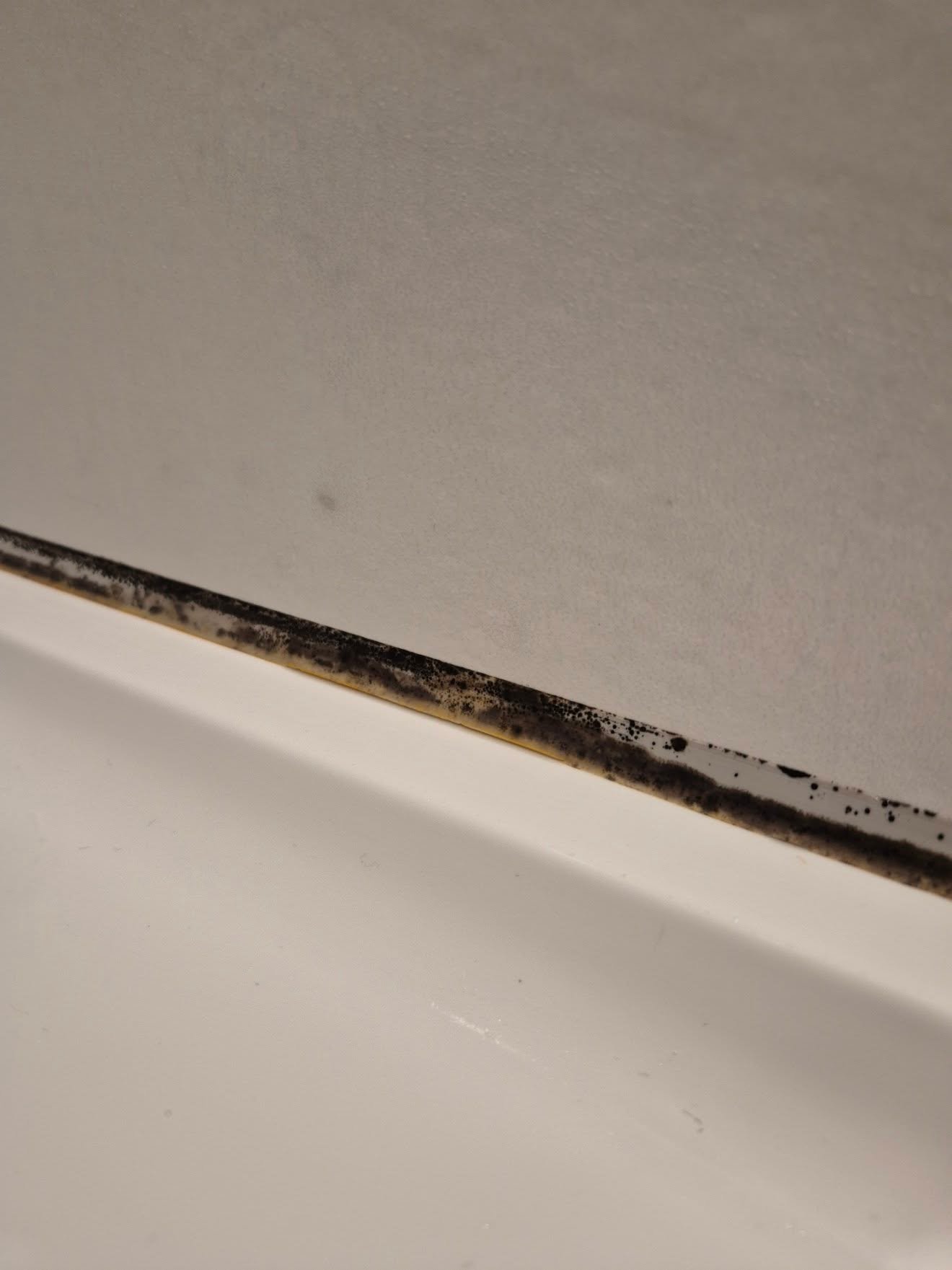
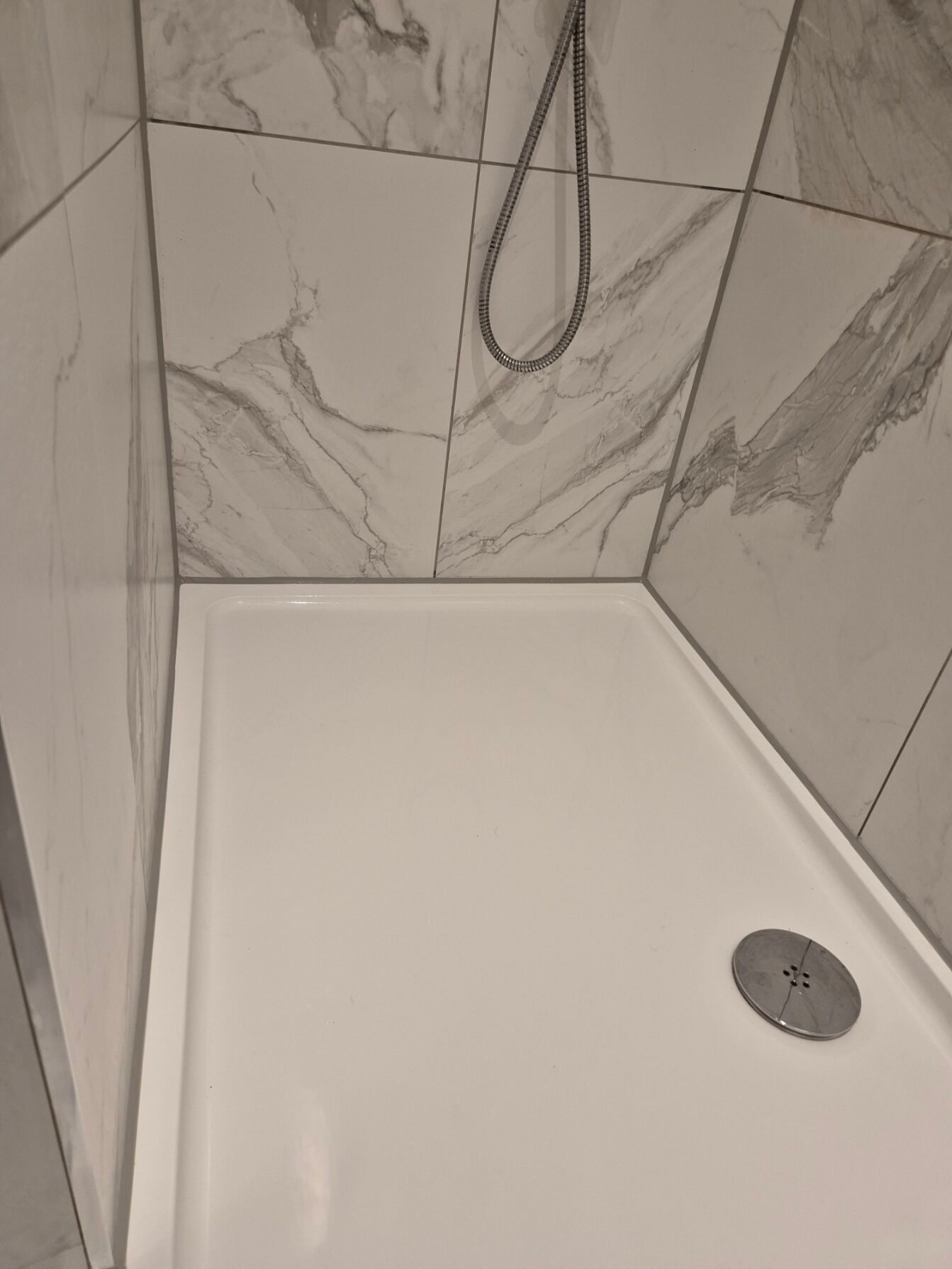
Stripping the failed silicone back to a clean, dry joint and reapplying a colour-matched, sanitary-grade sealant restores the seal to full protection. Done correctly it cures within 24 hours — the room is back in service the next day.
Budget-friendly
Partial reseal
For estates managing a large number of rooms, targeting just the bath and shower seals — the areas doing the most work and carrying the highest water damage risk — brings the whole property’s high-risk areas up to standard at a lower cost per room.
Pair it up
Grout steaming
Worth adding where tiled surrounds show black mould or discolouration in the grout lines. It’s a natural pairing with a reseal — the crew is already on site working the same area — and deals with the visible mould at the same time as the underlying seal.
The maintenance case for acting proactively
The cost comparison is straightforward once it’s laid out side by side.
Reactive — waiting for the stain
- Water gets in and tracks into the structure unseen
- Damage spreads to the room below
- Both rooms come out of service at once
- Remedial building work is needed
- Final bill includes drying out, plastering and redecoration
- Plus lost room revenue — on top of the reseal you needed anyway
Proactive — scheduled maintenance
- Seal condition checked on a set cycle
- Problems caught while they’re still a same-day fix
- Cut-out and reseal, or partial reseal for rolling budgets
- Minimal disruption to occupancy
- Back in service within 24 hours
- No remedial building work, no lost room-nights
For any estate managing multiple bathrooms, the sensible approach is a rolling maintenance schedule rather than waiting for a failure to become visible. Checking seal condition on a set cycle catches the problem while it’s still a same-day fix — not a room-closure event.
Getting an accurate picture of your risk
Every property is different. Bathroom count, usage levels, age of the last reseal and existing damage all affect what a sensible next step looks like. The only way to give an accurate answer — and the only way to know your actual exposure to silicone sealant water damage — is to see the property.
-
Book a no-charge floor walk
We’ll assess bathroom condition across your property and flag anything at risk before it becomes a room-closure problem. No obligation.
-
Get in touch directly
Call 07841 284955 or email premiercleanandseal@gmail.com to talk through your property and get a straightforward view of what’s needed.
-
Download our Hotel Bathroom Maintenance Guide
A practical 6-page reference for facilities and maintenance teams: why hotel silicone fails, what a professional reseal should involve, how a rolling programme works, and a quick self-audit to check whether your estate is at risk.
No obligation, no charge
Find out what your estate is actually exposed to
We’ll walk your bathrooms, flag the seals at risk of failure, and give you a straight answer on what needs doing and what can wait.
Frequently asked questions
How long does silicone sealant actually last?
Typically several years, but it depends heavily on use and location. A domestic en-suite used by two people behaves very differently to a hotel bathroom turned over daily or a leisure centre changing area. High-turnover, high-humidity bathrooms reach the end of a seal’s working life considerably faster, which is why usage — not just age — should drive your inspection cycle.
How can I tell if silicone has failed before there’s visible water damage?
Look for the seal lifting or peeling away from the bath, tray or wall; cracks or splits along the bead; black spotting that returns quickly after cleaning; any softness or movement when pressed; and gaps at corners and junctions. A musty smell with no obvious source is another early warning. All of these appear well before a stain shows on the ceiling below.
Can you just apply new silicone over the old bead?
No — and this is the single most common shortcut we’re called back to fix. Silicone doesn’t bond reliably to old silicone, so a bead applied over a failed one traps moisture and mould underneath and fails again quickly. A proper cut-out and reseal strips the old sealant back to a clean, dry substrate before the new bead goes on.
How long is a room out of service for a reseal?
A correctly executed cut-out and reseal cures within 24 hours, so in practice a room is back in service the following day. Compare that with a reactive water damage repair, where drying out, plastering and redecoration routinely take a room offline for days to weeks — often alongside the room below it.
Do you work across a whole estate rather than single bathrooms?
Yes. We work with hotels, leisure facilities, student accommodation providers, schools, hospitals and housebuilders across Greater Manchester and the North West, including the NHS, Manchester City FC Academy and Lakeside Hotel & Spa. Whether it’s a rolling partial-reseal programme across hundreds of rooms or a full bathroom refresh, the standard of finish is the same. See recent projects →
What’s the difference between a full cut-out and reseal and a partial reseal?
A full cut-out and reseal addresses every silicone joint in the bathroom — bath, shower, basin, worktop, floor and window joints. A partial reseal targets only the highest-risk joints, usually the bath and shower, where the most water volume is handled. For large estates on a fixed maintenance budget, a partial reseal across every room is often a better use of spend than a full reseal in a handful of rooms.
Premier Clean & Seal specialises in silicone sealant and mastic application for commercial and hospitality properties across the North West, with clients including the NHS, Manchester City FC Academy and Lakeside Hotel & Spa. Family-run since 2017, with 30+ years of combined trade experience. View all services →
